|
|
I am son of Danica Pop-Tosic (Oklobdzija) and Gojko Oklobdzija
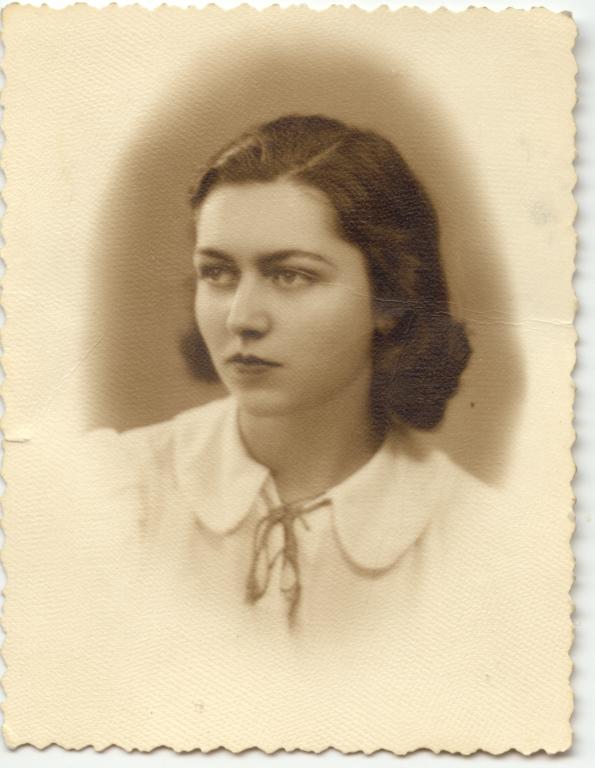

They passed away recently: my mother on October 15th, 2002 and my father on January 12, 2004. I decided to post this web page as a memory and tribute to them. This is how I would like to remember them.
They were both fighters in the WW-II, Yugoslav anti-fascist partisan resistance: My father was one of the organizers of the anti-fascist uprising in 1941 and from a his early age lived underground. He came out of the liberation war as a colonel of the Yugoslav Peoples Army. My mother joined the resistance later and came out as a Major of the Yugoslav Peoples Army working in the army intelligence. This is where they met.
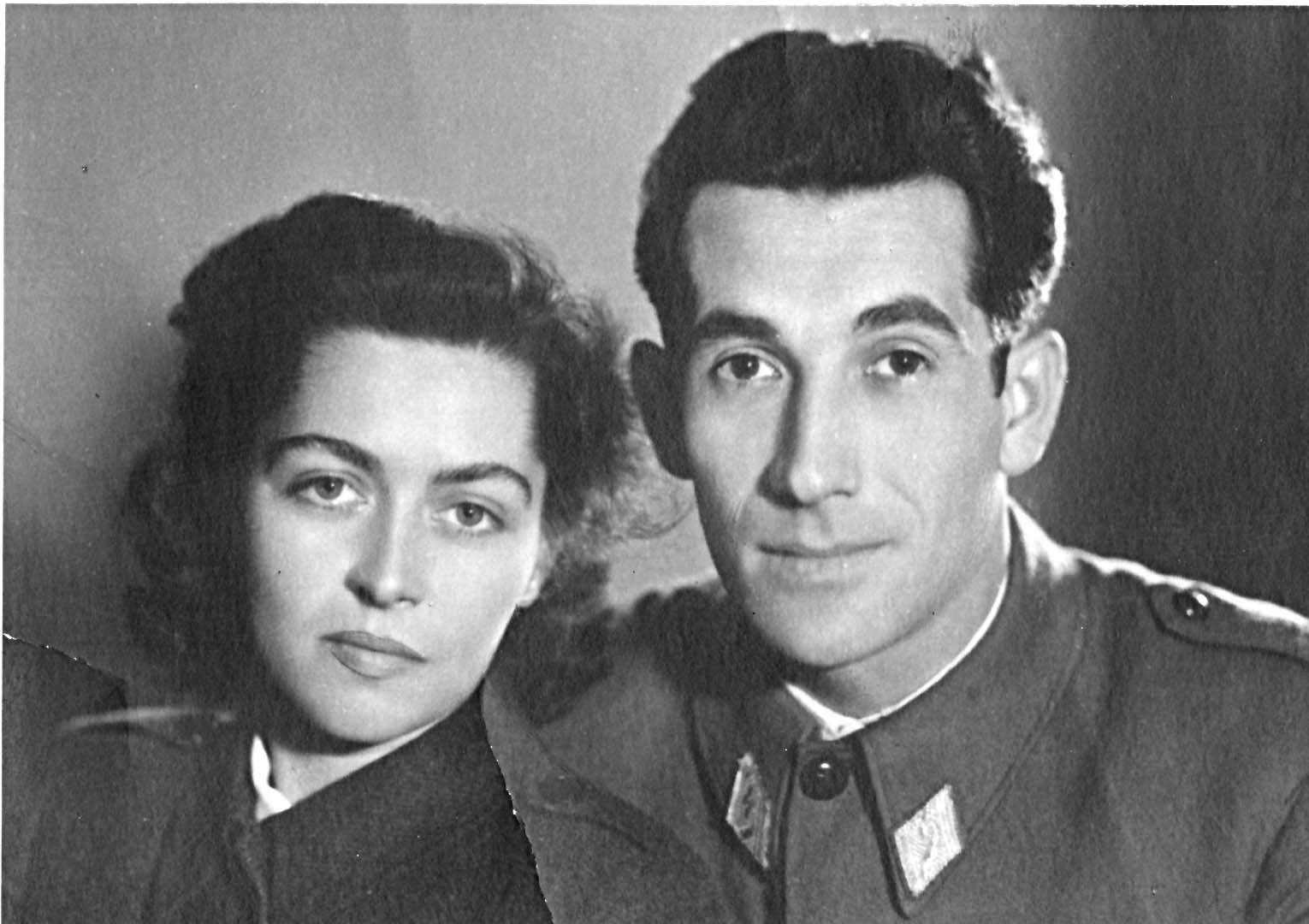
My mother and father in the army right after liberation (1946)
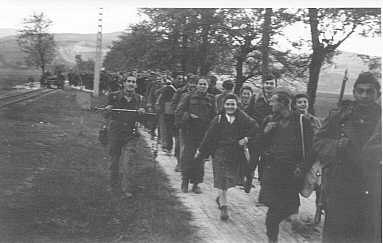
My father with his partisans, WW-II (circa 1942, I believe somewhere in East Bosnia)
After the WW-II they both lived civilian life: my father was engineer. Immediately after the war he was responsible for re-building of the military industry. Ironically, majority of the factories he build were the prime targets of NATO in their 1999 attack on Serbia - perhaps a compliment to his good work. He traveled, was fluent in five languages and was keenly interested in history and social issues. He, as well as my aunts, were a product of a good educational system that existed before WW-II - had culture and knowledge that I will never reach in my life. He left behind a lot of political and social writings. My mother worked as a social worker after the WW-II, but was mainly "a mother" - a good mother to both my brother and myself. There was always something warm and good to eat in my home not only for us but for many of my friends and visitors. She would never refuse a request for a favor and had a very soft heart, understanding, patience and fine word for everyone. People loved her, trusted her and would do just about anything for her.
My Father:
My fathers family comes from Lika (Serbian Krajina - "Frontier" region of former Yugoslavia, currently occupied by Croatia). The "Frontier" region was populated by South-Slavs (Serbs) who moved westwards after Serbia was defeated by the advancing Ottomans in 1389. They fought further advancement of Turks (Ottomans) forming a protection barrier that saved Europe from Ottoman invasion (Remember, that Vienna was besieged by Turks). For that role they were receiving protection and support of Austrian Empire. My great-great-great-great .. -grandfather fought as a general of the Austrian army and in 1783 received nobility title: von Kugburg.
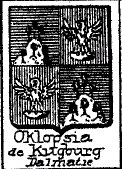
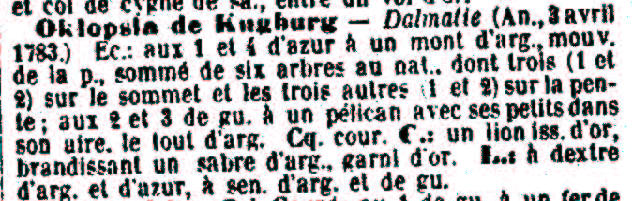
(Austrians butchered my last name. If
spelled correctly it should be von Kukburg and Oklobdzija)
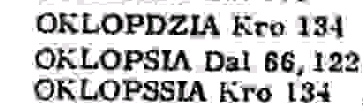
Another "great-great-great-great..."-grandfather was a general in Russia and for his services was awarded land in Georgia where he died. Today there are three villages in Georgia populated by people with my last name. The local story tells that they "came from somewhere" - "megrel (word in Georgian)".
In my father's family a generation of military man was followed by a generation of priests, followed by a generation of military man. In this way militant blood mixed with the spiritual for many generations. One of my great-great-great-grandfathers baptized Nikola Tesla, the famous Serbian scientist who worked in USA and invented the system for generation, use and transmission alternating currents (AC) used to day as well as radio (priority of his patents on radio over Marconi was established by the US supreme court in 1943).
My father came from a family of 10 children. One died at a very early age. From the remaining 9 I had 6 aunts and 2 uncles. Four of them: two of my aunts, Dusanka and Neda, my uncle Bogdan and my father are decorated with the 1941 Medal - recognition given to those few who organized and fought the resistance war (WW-II) against occupying Germans. My aunt Dusa was captured, beaten and sent to the concentration camp in Germany (Jenna). She miraculously survived and returned wearing an UNRA flower bag (in place of skirt) when everyone in the family presumed she was death. My other aunt Neda was captured in 1943, by Serbian Royalists (Chetniks) who collaborated with Nazis, tortured and sent to a concentration camp near Belgrade. She survived too. My uncle Bogdan was captured in 1941 - his unit resisted advancing Germans for good six months. By mistake he was sent to a concentration camp in Norway (polar circle) instead of the transport scheduled for execution. This mistake was found later and he was shot in Norway. He was only wounded, he pretended to be dead and dug himself out of the dead bodies at night and escaped. Thanks to the Norway underground resistance channels he was able to escape and survive.
My father was never captured - he fought until the end of the war and walked into Belgrade as liberator on the liberation day 20th of October 1944, his 29th birthday. Belgrade was freed by the Soviet Red Army units that liberated Europe.
My Mother:
My mother comes from a modest family. Her father Jovan was the tax officer (IRS Man) responsible for the southern region of Serbia. This is the reason my mother was born in Pristina (currently occupied by UNPROFOR). His family comes from Leskovac (the city whose civilian population was savagely bombed in WW-II by British, under the pretense that they were bombing German units that went unscratched). Her mother (my maternal grand mother) comes from the city of Nis. Nis was the war capital of Serbia (WW-I) and dates back to the Roman time. It was the birth place of Roman emperor Constantine (the one who made Christianity an official religion of the Roman empire, thus legalizing and officially establishing Christianity as a religion).
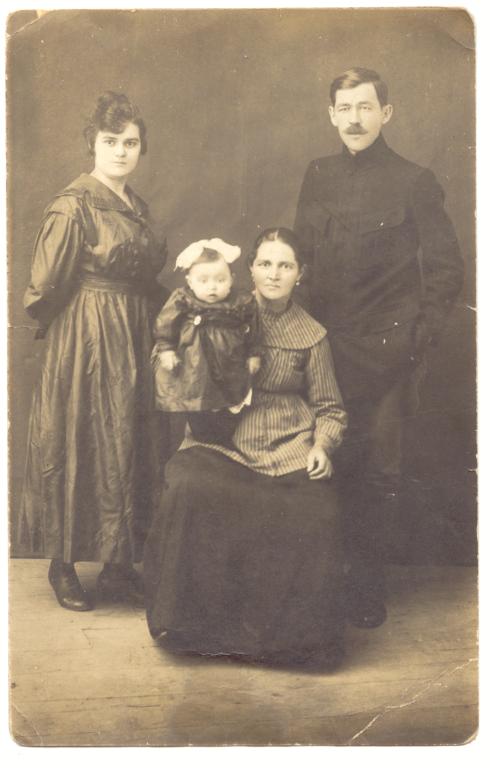
My Grand Mother Leposava and my Grand Father Jovan (standing).
My Great Grand Mother Evgenija (sitting) holding my mother Danica
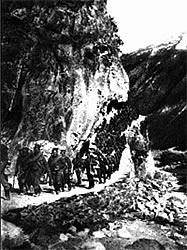
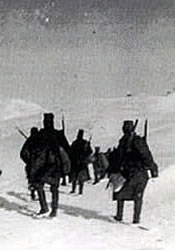
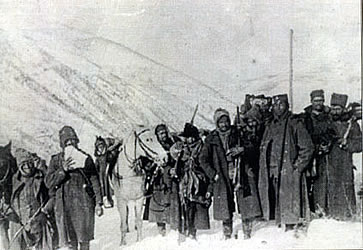
My grand father Jovan fought in the WW-I. He was in the units of the Serbian army that crossed the mountains of Albania in WW-I, and exodus in which hundreds of thousands perished.
 |
 |
 |
|
Kachanik
|
Somewhere in Albania
|
|
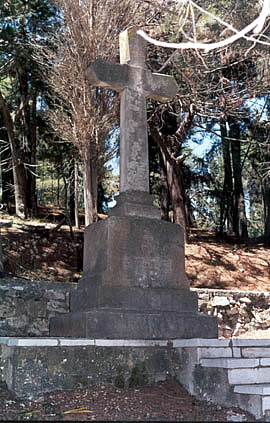
Vido Island, the place where Serbian soldiers who died in WW-I from the consequences of crossing Albania mountains were buried.
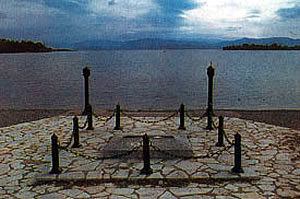
Vido Island: "Blue Graveyard", 150,000 Serbian soldiers were buried here in the sea
My Grand-Father recuperated in Greece and from there advanced with the Serbian army in an offensive that broke the lines of Austrians and Germans (Thessalonica front), bringing liberation to Serbia. He died shortly from the consequences of the WW-I, his wife died shortly after him leaving my mother an orphan at the age of 16 with a younger brother and sister to take care for. Their house was repossessed and they lived a very difficult life. In spite, my mother was one of the best students in her high-school and she was earning giving classes in mathematics to other students.
After the war (WW-II) we lived in Rijeka, northern coastal town (port) of Yugoslavia. I grew up there and even though this was not my birthplace, I consider it to be my birthplace and my home-town.
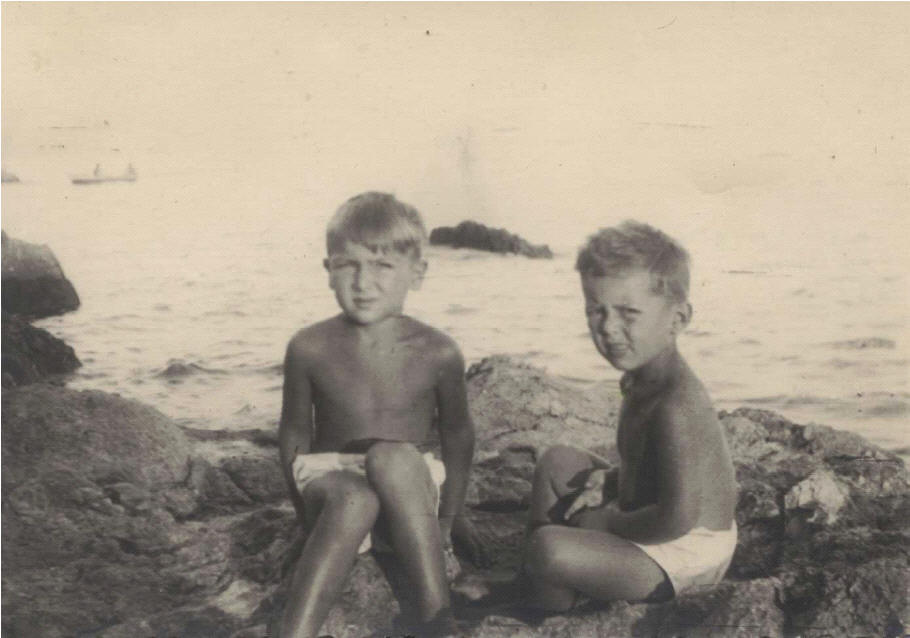
My brother Nikola (left) and myself (right) in Rijeka (more precisely, Kantrida, on the coast in front of our house where I grew up), 1952. We lived a very modest, for some standards poor, but happy life; happiness and beauty I have never found in any place in the world and I am still searching .....
Nikola Oklobdzija (1946-2015) |
||||
|
|
||||
Photo Album |
Communities & Forums |
|||
 Look
at my new online photo album filled with pictures from my vacations, sporting
events, and my family. Look
at my new online photo album filled with pictures from my vacations, sporting
events, and my family. |
|
|||
